
Metal profiles, trims and panels, shop-made in Utah
We cut, bend and finish the thin lines of metal that complete an interior: trims, panels and accent pieces for design studios, shopfitters and businesses.
- Made in our shopCut, bent and finished here, then handed over ready for your team
- Drawing read firstQuestions in writing and a written quote before work
- First piece for approvalSee and hold a sample before the full run
The quiet lines that finish a room
Summit Line Architectural Metal LLC is a small fabrication shop for the thin, precise metal that finishes an interior: edge trims, reveal strips, frame profiles, counter fronts, wall sheets and accent pieces. We make them in our shop from aluminum, stainless steel and mild steel, and hand them over ready for your team to fix in place.
We work for businesses: interior designers and architectural studios, shopfitters and joinery workshops, display and fixture builders, and the restaurants, shops and offices they build for. Most of our work starts as a drawing, a section on the back of a sketchbook or a photo of a trim someone wants matched. We read it, ask the questions that matter, and send a written quote before any work begins.
Draw a profile in four bends
Most trims we make are a strip of sheet with two to four bends. Add bends to the strip below and see the section take shape, what it is called and where it is used. When it looks like your idea, carry the sketch into a request.
Flat strip, no bends yet
0 of 4 bends
Flat strip
A plain strip cut to width. Used as a cover strip over a joint between two panels, a kick strip along a counter base, or an inlay set into a table edge.
Three kinds of work, sorted by shape
Our site is arranged the way parts look on the bench: long lines, broad surfaces and small details. Each group has its own page with the services inside it.
-
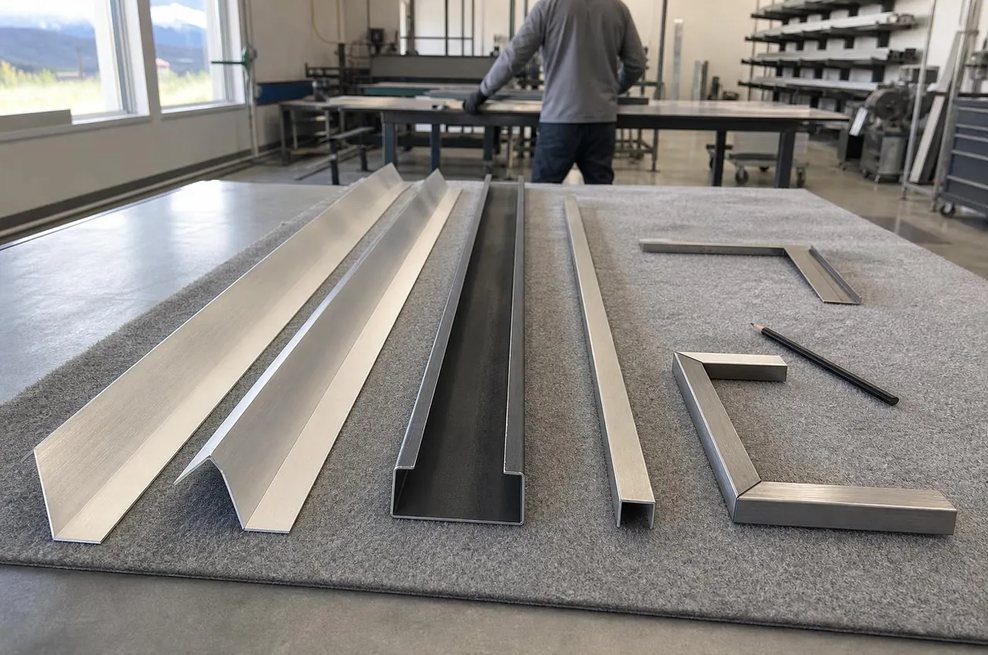
Profiles and trims
The long, thin lines of an interior. Angles, channels, reveals, Z shapes and hemmed edges, formed on the press brake and cut to length with mitered or capped ends.
-
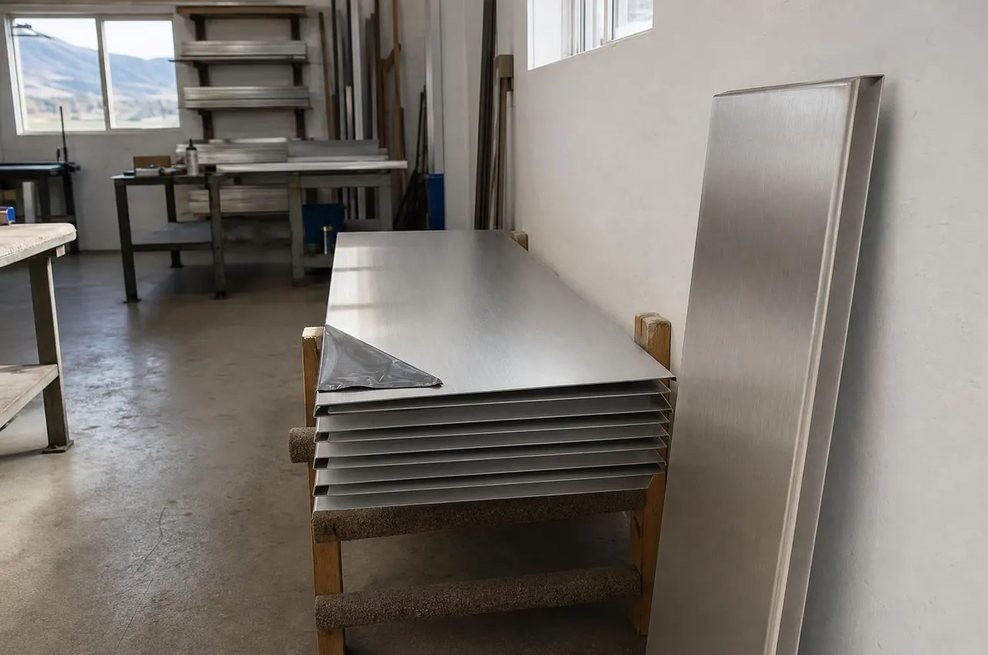
Panels and sheets
The broad surfaces. Counter fronts, wall sheets, display backs and kick plates in aluminum and stainless, with the edges and returns your design calls for.
-
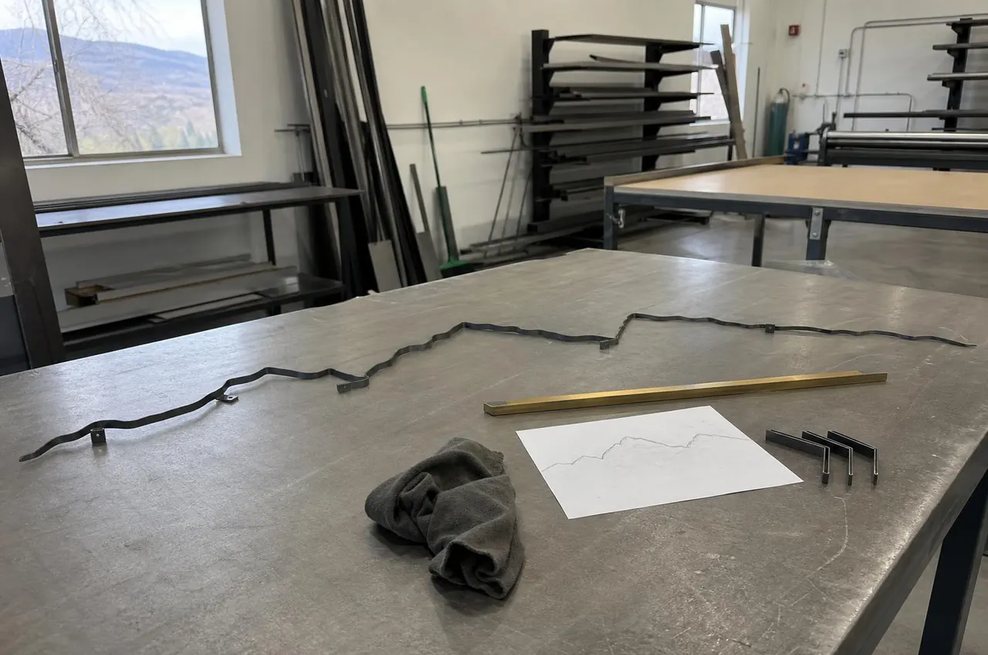
Accent pieces
The details people remember. Line art in bent flat bar, feature strips, shelf edges and simple letter shapes for business interiors.


Three metals, chosen for the job
We work in aluminum, stainless steel and mild steel sheet, strip, bar and light extrusions. The right one depends on where the part goes, who touches it and how it is finished.
Aluminum
Light and quick to form. Our usual choice for long trims, display frames and large panels that need to be easy to handle. Brushed along the length or prepared for your coater.
Stainless steel
For surfaces that are touched and cleaned every day. Counter fronts, kick plates, corner guards and service area trims with a satin brushed finish that stays even.
Mild steel
For pieces that will be painted, powder coated or given a dark blackened finish. Ideal for line art, shelf edges and frames with a strong, dark outline.
From a line on paper to a part on the bench
Every job follows the same four steps. The first piece step is the one customers value most, because it settles the look before the run is made. What to put on a drawing
- 1
Send the line
A drawing, a section sketch, a photo of an existing trim or a sample. Add the material, the finish, the lengths and the quantity if you know them.
- 2
We read it and quote
We check the section, the bend order and how the parts split across the sheet, then send our questions with a written quote.
- 3
First piece for approval
A short first piece or sample is formed and photographed or set aside for you to collect and hold against your materials.
- 4
Run, pack, hand over
The run is made to match, protected, bundled and labeled by your drawing references, then collected from the shop or picked up by your carrier.
A valley shop with a long view
Our shop sits in Cache County and nearby Box Elder County communities, with a wide window onto the fields and the mountain line that gave us our name. Customers drop off samples, hold first pieces against their materials and collect finished parts here during office hours.
Drawings arrive by email from design studios and fit out teams further afield as well. As long as the parts can be collected from the shop or picked up by a carrier you arrange, distance is rarely a problem.

Questions we hear first
Who do you make parts for?
Businesses: design studios, architectural practices, shopfitters, display builders and the shops, restaurants and offices they build for. If a designer or a fit out team is handling your project, ask them to send us the drawings.
Can you fix the parts in place for us?
Everything we make is made and finished in our shop and handed over ready to fix. Your own team or fitter puts the pieces up, and we prepare holes, tabs or cleats to suit how they work.
What if we only have a sketch?
Send it. We redraw the section, add the questions we need answered and send it back to you to confirm before we quote.
How do we get the parts?
Finished parts are packed and labeled for collection from our shop, or for pickup by the carrier you arrange. We pack long trims in bundles that are easy to carry.
Have a section on paper?
Send the drawing, a sketch or a photo of the trim you want matched. We read it, send back our questions and a written quote before any work starts.